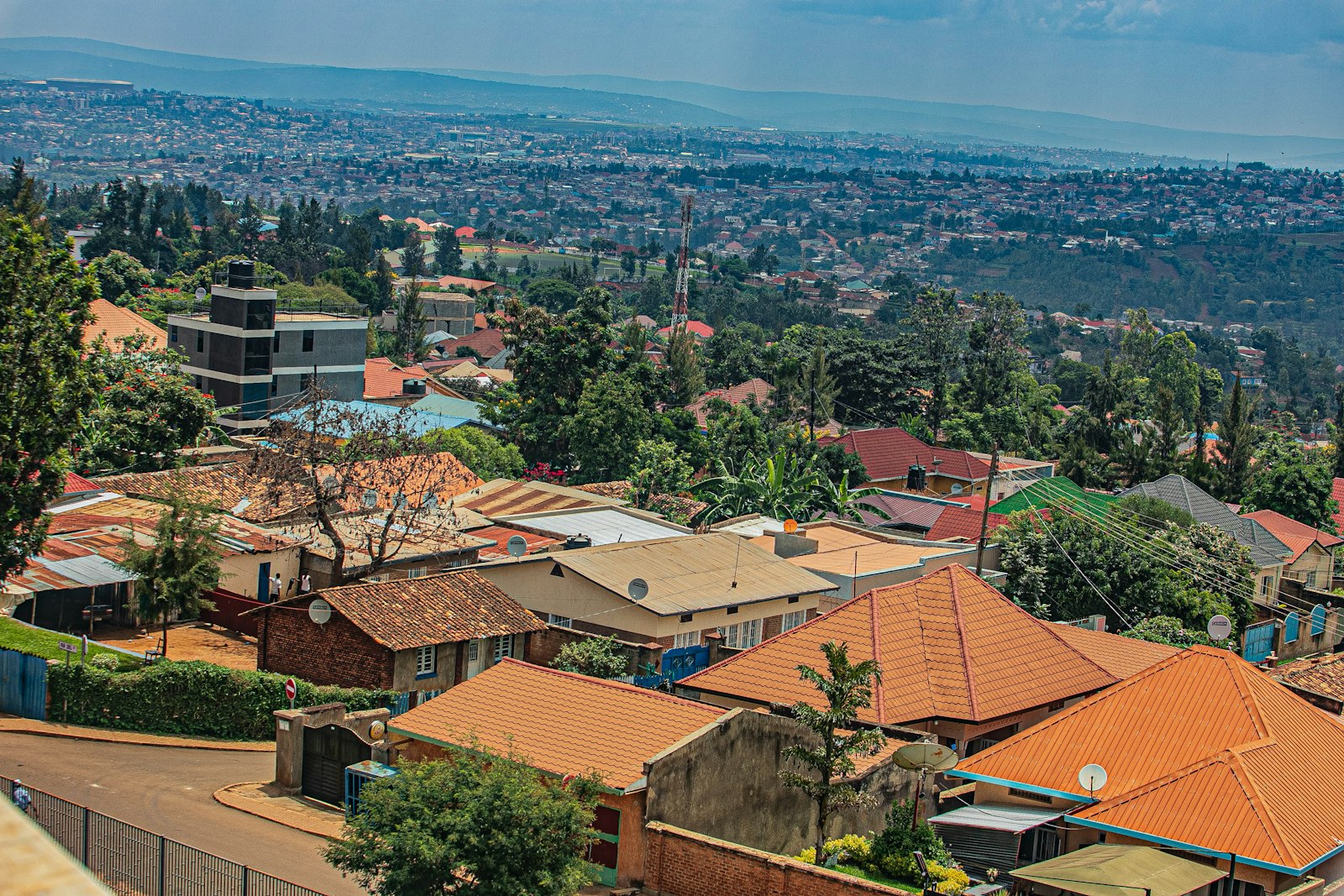
Photo by Protais Benjamin MUGENZI on Unsplash
In May 2026, the blogger and commentator Aimable Karasira died in a Rwandan prison on the very day he was due to be released. He had served a five year sentence for incitement to divisionism after criticizing the government online. The circumstances of his death were, in the words of the civil society network CIVICUS Monitor, "highly questionable." A month earlier, opposition leader Victoire Ingabire, who leads the unregistered party DALFA Umurinzi, had been arrested at her home in Kigali and was facing fresh subversion charges for what Amnesty International called peaceful political work.
These two episodes sit uneasily beside another set of facts about Rwanda that are just as well documented. Women hold 63.75 percent of seats in Rwanda's Chamber of Deputies, the highest share of any national parliament in the world, according to UN Women's 2026 to 2029 strategic note for the country. Life expectancy has reached 70.2 years, the government reports, and under five mortality fell from 45 to 36 deaths per 1,000 live births between the two most recent Demographic and Health Surveys. The World Bank has backed Rwanda's health system with 360 million dollars in support that helped fund more than 26,000 community health workers and clinical staff serving 5.2 million people. The International Monetary Fund projects the economy will grow 7.2 percent in 2026, and the government points to 9.4 percent growth recorded in 2025.
This is the heart of what is often called the Rwanda model: a state that delivers results on poverty, health and gender representation that few African governments can match, built and maintained by a government that tolerates almost no organized political opposition. The question that keeps coming back, three decades after the 1994 genocide against the Tutsi that killed up to 800,000 people and from which this state was rebuilt, is whether that trade is sustainable, or even accurately described as a trade at all.
What the numbers actually show
The achievements are real, but they are not uncomplicated. The government's own Voluntary National Review reports poverty falling from 39.8 percent in 2017 to 27.4 percent in 2024, a genuine and significant decline. The World Bank, in its country assessments, is more cautious, noting that the pace of poverty reduction has slowed in recent years even as headline growth figures remain strong. Rwanda ranks 160th out of 174 countries on the World Bank's Human Capital Index, a measure of how much a country is investing in the future productivity of its people through health and education, a position that sits awkwardly next to the growth statistics.
Public debt is also rising. The IMF and World Bank project it will climb above 77 percent of GDP by the end of 2026, a level that complicates Rwanda's stated ambition of reaching upper middle income status by 2035 under its Vision 2050 strategy. None of this erases the genuine gains in health and gender representation. It does mean that Rwanda's growth story, like most growth stories, is uneven underneath the aggregate numbers, and that the government's own framing of its progress is one input among several, not the final word.
A closed political system, documented in detail
On the political side, the picture is less ambiguous. Human Rights Watch's World Report 2026 states plainly that Rwanda continued repressing the domestic opposition through 2025, and that few journalists, activists or opposition figures publicly criticize the government. Several journalists and opposition members remain in detention. The Karasira and Ingabire cases are not isolated incidents but the most visible recent examples of a pattern HRW and Amnesty International have documented for years: the use of charges such as "spreading false information or harmful propaganda with intent to cause a hostile international opinion," an offense Human Rights Watch has called incompatible with Rwanda's international human rights obligations, to prosecute government critics.
The reach extends beyond Rwanda's borders. HRW's July 2025 submission to the United Nations Universal Periodic Review of Rwanda documents what researchers describe as transnational repression, tactics used against real or perceived critics living abroad, including refugees and asylum seekers. In one documented case from May 2024, Rwandan immigration authorities denied entry to a senior HRW researcher who had been investigating these issues. When the UN Human Rights Council adopted the outcome of Rwanda's periodic review in June 2026, the government accepted 87 percent of the recommendations put to it. CIVICUS Monitor's assessment is that Rwanda continues to restrict independent critics, journalists and political opposition regardless.
Rwanda's government disputes characterizations of it as authoritarian, arguing that the stability and consensus politics it has built are themselves the precondition for the development gains above, and that Rwanda's history gives it legitimate reason to restrict speech that could incite ethnic division. That argument deserves to be stated fairly. It does not fully account for the breadth of what has been documented, which extends well beyond genocide denial laws into the prosecution of ordinary political dissent and criticism of government policy.
The M23 question
Rwanda's record outside its own borders complicates the picture further. United Nations Group of Experts investigations have repeatedly found evidence of Rwandan military involvement in the M23 rebellion in eastern Democratic Republic of Congo, a conflict covered in more depth elsewhere on this site. A 2024 UN panel report, as covered by wire services at the time, concluded there was substantial evidence that the Rwandan army had directly intervened in the conflict and supplied M23 with arms and uniforms, with estimates of several thousand Rwandan soldiers operating alongside the rebel group. Rwanda has consistently denied direct military support for M23, while the United States, France and others have aligned with assessments that hold Rwanda responsible. The dispute over Rwanda's role in a conflict that has displaced millions of Congolese is now a permanent feature of how the government's regional conduct is assessed, alongside its domestic record.
An honest assessment
It is possible, and necessary, to hold two things as true about Rwanda at once. The health, gender representation and growth achievements are real, independently verified by institutions with no particular reason to flatter Kigali, and they have materially improved life expectancy and reduced poverty for millions of Rwandans. The restrictions on political opposition, independent media and critics both inside and outside the country are equally real, equally well documented by organizations with long records of rigorous, evidence based reporting, and they extend to the prosecution and, in Karasira's case, the death of a government critic under circumstances that have not been adequately explained.
Whether "development without democracy" is a fair or sustainable trade is ultimately a judgment different observers will reach differently, and it is not this publication's place to resolve that question with false certainty. What can be said plainly is that neither half of Rwanda's record cancels out the other. A government can build functioning hospitals and still deny its citizens a meaningful opposition. A country's growth charts can point upward while its press freedom indicators point in the opposite direction. The Rwanda model, if the phrase is useful at all, describes both of these realities simultaneously, not just the one its government prefers to advertise.
Sources
- Rwanda's strong economic performance and social progress highlighted in latest UN study, via KT Press
- UN Women Rwanda Strategic Note 2026-2029, via UN Women
- World Bank Rwanda country page, via World Bank
- Rwanda and the World Bank Celebrate 60 Years of Strong Partnership, via Rwanda Ministry of Finance and Economic Planning
- World Report 2026: Rwanda, via Human Rights Watch
- Authorities continue crackdown on digital commentators and YouTube-based critics, via CIVICUS Monitor
- Submission to the Universal Periodic Review of Rwanda, via Human Rights Watch
- Urgent Action 13.26: Rwanda, via Amnesty International
- UN experts point to Rwandan role in east DR Congo rebel crisis, via VOA News