

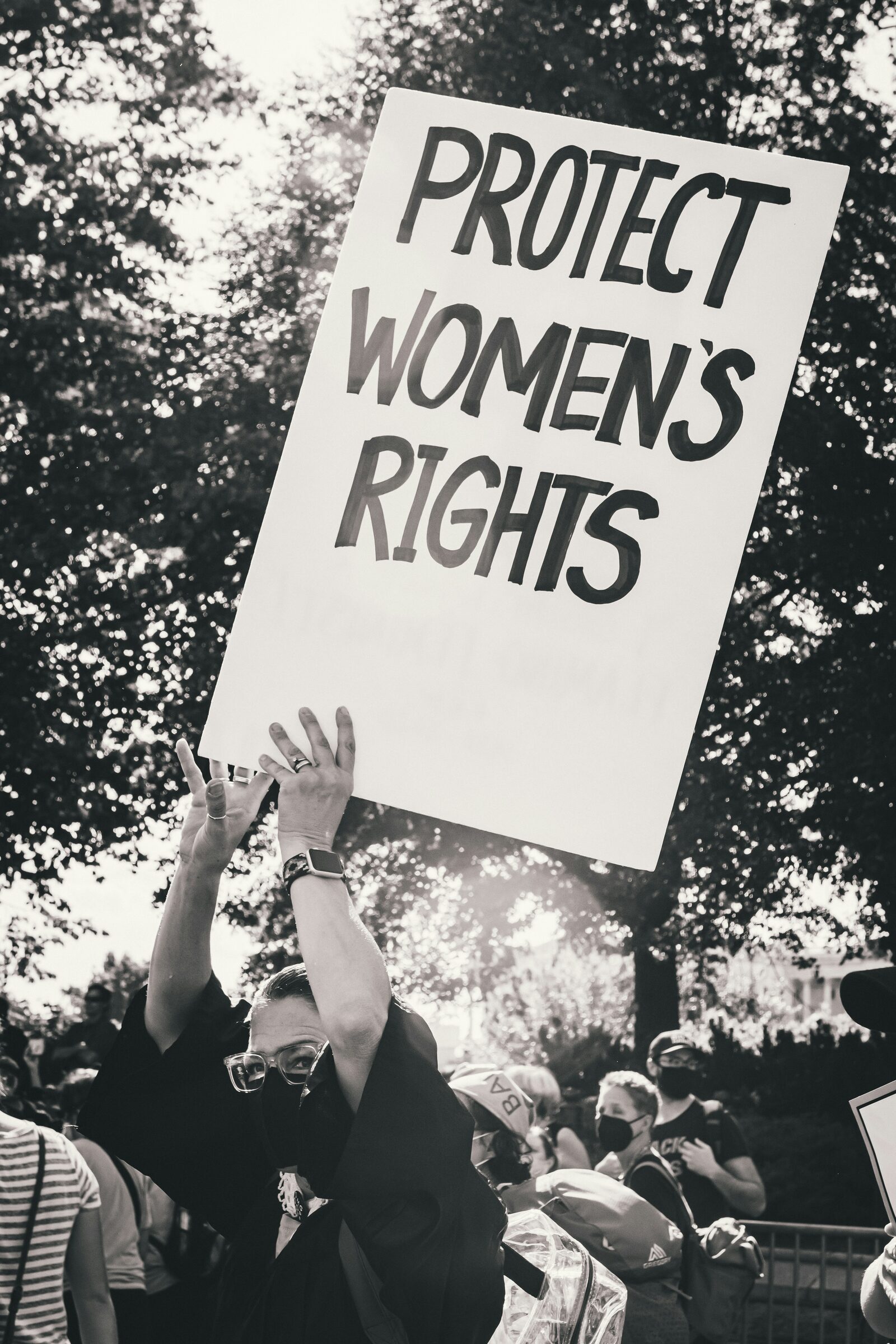
Photo by Gayatri Malhotra on Unsplash
In late September 2026, two mass shootings four days apart tore through communities on opposite sides of South Africa. In Wedela, a small mining town in Gauteng, gunmen opened fire inside a tavern and killed 17 people. Days earlier, in Lwandle near Cape Town, another tavern shooting left 10 people dead. Five days before that, in KwaMakhutha outside Durban, gunmen killed 11 more. Thirty eight people, most of them killed while simply having a drink with neighbours, in under two weeks.
Around the same time, a separate horror was unfolding in Gauteng. Since mid July 2026, the bodies of at least nine women, aged between 20 and 38, have been found dumped in and around Johannesburg. Police have described the pattern, similar ages, similar circumstances, bodies left in open or hidden spots, as the work of someone deliberately targeting women. One suspect has been arrested, but investigators have not ruled out more than one person being involved.
These two threads, mass gun violence and the killing of women, are often talked about in the same breath in South Africa, and for good reason: both point to a society where lethal violence is common and accountability is rare. But they are not the same problem, and collapsing them into one story risks missing what each actually requires. The Gauteng femicide victims, according to reporting on the police investigation, were not shot. Several showed signs of strangulation, sexual assault, or other physical violence; one victim's throat had been cut. Gun violence and femicide overlap in South Africa's broader crisis of impunity, but they have distinct causes, and they need distinct solutions.
A country awash with illegal firearms
South Africa's murder rate is among the highest in the world outside active conflict zones. The South African Police Service's own crime statistics for the first quarter of 2026 recorded over 6,800 murders in three months, a pace of more than 75 murders a day nationally. A significant share of these killings involve firearms, and researchers at the Institute for Security Studies (ISS) have long argued that the country's murder rate cannot be separated from the sheer number of illegal guns in circulation.
Much of that illegal supply traces back to failures inside the state itself. South Africa's Central Firearms Registry, the body responsible for licensing and tracking legal guns, has for years been flagged by the ISS and by Parliament's own police portfolio committee as dysfunctional, understaffed, and in some cases complicit in weapons ending up on the black market. Firearms reported lost or stolen from police stores, guns diverted from legal dealers, and weapons trafficked in from conflicts elsewhere in the region all feed into a pool of illegal weapons that is, by most expert estimates, larger than the legally licensed civilian arsenal.
Tavern and shebeen shootings, like the ones in Wedela, Lwandle, and KwaMakhutha, are not new. Community leaders and police have linked many of these attacks to turf disputes between competing criminal groups, arguments that escalate quickly because a gun is close at hand, and in some cases contract style hits carried out in public spaces where the shooter can disappear into a crowd. The common thread researchers keep returning to is availability: in a country with an estimated illegal firearm population running into the hundreds of thousands, disputes that might end in a fistfight elsewhere end in a mass shooting.
Femicide: a slow-burning emergency
South Africa's femicide rate has been described by researchers at the South African Medical Research Council (SAMRC) as several times the global average. The SAMRC has tracked femicide through national mortuary surveys since the late 1990s, and its data shows a troubling picture: after a period of gradual decline in intimate partner femicide during the 2000s and 2010s, more recent surveillance points to that trend reversing.
The current Gauteng case, nine women found dead since July, has drawn intense national and international attention partly because of its scale and the fear that a single perpetrator, or a small group, is responsible. But researchers and activists caution against treating serial cases as the main story. The overwhelming majority of femicide in South Africa is not the work of strangers. National studies have repeatedly found that most women murdered in South Africa are killed by a current or former intimate partner, in their own homes. The Gauteng cluster is unusual precisely because it does not fit that pattern, which is part of why it has generated so much public fear and media coverage, even as the more routine, domestic form of femicide continues largely unremarked in the background.
Why it persists
Researchers, civil society groups, and government's own reviews point to a mix of overlapping failures rather than a single cause.
Policing capacity is one. The Central Firearms Registry's documented backlogs and internal corruption were flagged as a national risk by the ISS and by parliamentary oversight committees, yet reform has been slow. Detective units investigating gender-based violence and murder cases are widely reported to be under resourced relative to caseloads, which contributes to South Africa's low conviction rates for both murder and sexual offences.
Impunity is another. When perpetrators of gun violence or violence against women face a low likelihood of arrest, prosecution, or conviction, deterrence collapses. Civil society organisations working on gender-based violence have repeatedly pointed to slow forensic testing, under resourced sexual offences courts, and case backlogs as reasons survivors and families see so little justice.
Social and economic conditions compound both crises. High unemployment, particularly among young men, has been linked by South African criminologists to gang recruitment and turf violence in townships and informal settlements, the same settings where tavern shootings tend to occur. Entrenched patriarchal norms, meanwhile, are cited by gender-based violence researchers as a persistent driver of intimate partner violence, one that survives economic development and legal reform because it operates at the level of culture and household power, not just policy.
What is, and is not, being done
In November 2025, the South African government declared gender-based violence and femicide a national disaster, a step intended to unlock emergency coordination and resources. But as Daily Maverick reported at the time, the declaration stopped short of granting the kind of emergency powers or ring-fenced funding that a disaster declaration can carry in other contexts. Critics noted that the National Council on Gender-Based Violence and Femicide, the coordinating body established by law to drive the national strategic plan on the issue, still was not fully operational nearly a year after the plan was adopted.
On firearms, the ISS and other researchers have called for a genuine overhaul of the Central Firearms Registry, tighter control over police owned weapons, and stronger cooperation with neighbouring countries to choke off cross border arms trafficking. Some of this has been promised in government statements following high profile mass shootings; little of it has been visibly implemented.
Civil society has, in some respects, moved faster than the state. Women For Change, founded in 2016 by Sabrina Walter, has grown into one of the country's most visible anti-femicide movements, organising marches and public pressure campaigns that helped push gender-based violence back onto the national political agenda. In 2026, activists in South Africa also took part in the G20 Women's Shutdown, using the country's hosting of the G20 to draw international attention to femicide rates. These movements have not stopped the killing, but they have kept the issue from being buried between news cycles, and they have forced politicians to respond publicly, even when the response has been limited.
An honest assessment
South Africa's problem is not a lack of diagnosis. Researchers at the ISS and the SAMRC, journalists, parliamentary committees, and civil society groups have identified, in detail and repeatedly, why gun violence and femicide persist: a flood of illegal weapons flowing partly out of state failures, chronic under capacity in policing and courts, deep impunity, and social conditions, unemployment and patriarchal norms, that make violence more likely and less likely to be punished.
What is missing is not analysis but follow through. The Central Firearms Registry's dysfunction has been known for years. The gap between the GBVF national strategic plan's ambitions and its actual funding and staffing has been documented by the same bodies meant to close it. Every mass shooting and every femicide case that makes international headlines is followed by official statements of concern, and then, all too often, by the next headline.
None of that is a reason to look away. It is a reason to keep asking, publicly and persistently, why solutions that experts have already spelled out remain unfunded, understaffed, or simply unimplemented. The women killed in Gauteng and the people killed in Wedela, Lwandle, and KwaMakhutha did not die because South Africa lacks the knowledge to prevent such violence. They died in the gap between that knowledge and the political will to act on it.
Sources
- Special edition crime statistics, first quarter 2026, via South African Police Service
- Illegal firearms are driving South Africa's murder rate, via Institute for Security Studies
- Nine bodies found in South Africa raise fears of serial femicide, via The Spokesman-Review (Washington Post wire)
- Separate mass shootings in South African townships leave 27 dead, via ABC News (Associated Press wire)
- South Africa declares gender-based violence a national disaster, via Daily Maverick
- Femicide in South Africa: national mortuary surveillance findings, via South African Medical Research Council